

Maharashtra's proposed Model Bye-Laws, 2026 for co-operative housing societies have entered the public consultation stage, with the Cooperation Department inviting societies and other stakeholders to suggest changes before the draft is finalised.
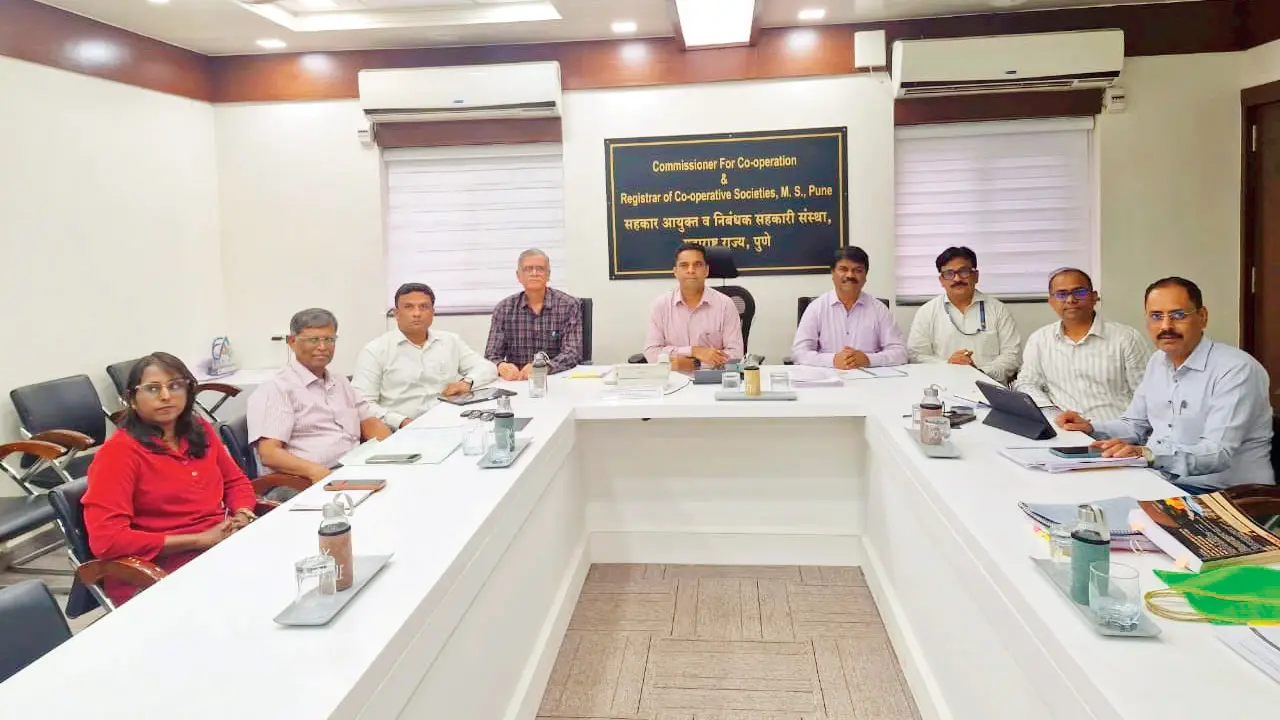
A consultation on the draft was held in Pune on August 13 under Deepak Taware, Commissioner of Cooperation, Maharashtra State. Senior officials of the Cooperation Department and representatives of the Maharashtra State Cooperative Housing Federation attended the meeting.
The proposed bye-laws seek to replace the 2014 model rules and bring the framework in line with changes in the law and issues that have become increasingly common in housing societies, including redevelopment, parking disputes, EV charging and digital communication.
What could change
Parking gets a detailed framework
The draft covers parking allotment, vehicle management, waiting lists, re-allotment and visitor parking.
Redevelopment gets wider coverage
It recognises redevelopment through private developers as well as self-redevelopment, cluster redevelopment, federations and apex bodies and other legally permissible methods.
EV charging gets its own provisions
The draft provides for private EV charging facilities, including installation and technical requirements.
Members’ rights are spelt out
These include participation in general body meetings, voting, inspection of records, obtaining certified copies, occupation and enjoyment of flats and grievance redressal.
Societies can go digital
Notices and other communications may be sent by hand, post, email and other legally permissible electronic means.
Conveyance gets greater emphasis
Managing committees would have greater responsibility for initiating conveyance and pursuing deemed conveyance where required.
The draft also contains provisions covering financial records, audits, statutory registers, emergency preparedness, fire and structural risks, electrical failures, medical emergencies and natural disasters.
31 forms for routine society work
The draft runs to more than 180 pages and contains around 17 chapters and 192 bye-law numbers. It also includes 31 forms covering matters such as membership, transfers, nominations, repairs, parking, leakage complaints, alterations and EV charging.
Have your say
The Cooperation Department has invited suggestions, objections and comments from housing societies, office bearers, federation representatives, advocates, architects, chartered accountants and other stakeholders.
Deadline: 5 pm, August 27
Email: coophsgmodelbyelaws@gmail.com
The draft has been put out on the Maharashtra Cooperation Department’s website. Suggestions received within the deadline will be considered before further action on the draft.
Why replace byelaws?
The proposed framework takes into account amendments to the Maharashtra Co-operative Societies Act, 1960, including provisions relating to Section 154B, the Maharashtra Co-operative Societies Rules, 2026 and the Real Estate (Regulation and Development) Act, 2016.
It also seeks to address issues that were less prominent when the 2014 model bye-laws were framed — particularly self-redevelopment, EV infrastructure, digital communication, structural audits, fire safety, parking and RERA-related matters.
‘CHS must participate’
Advocate Shreeprasad Parab, Expert Director, Maharashtra State Co-operative Housing Federation, welcomed the decision to invite suggestions before finalising the draft.
“Housing societies represent one of the largest forms of democratic self-governance in Maharashtra. Consequently, every stakeholder must actively participate in this process,” Parab said.
What happens next...
August 27: Deadline for suggestions and objections
After August 27: Submissions will be examined before the draft is finalised
September: The department is understood to be targeting publication of the final bye-laws in the first week of September. However, the September timeline needs confirmation from the department before being presented as a firm deadline.
Maharashtra’s Proposed Model Bye-Laws 2026 Set to Reshape Housing Society Governance
Draft discussed at a high-level meeting in Pune; suggestions and objections invited till August 27. Commissioner of Cooperation Deepak Taware chairs consultation with Federation office-bearers and senior officials. Final Model Bye-Laws expected in the first week of September.
Vinod Kumar Menon
The much-awaited Proposed Model Bye-Laws, 2026 for co-operative housing societies in Maharashtra have reached a crucial stage following a high-level consultation held on August 13 at the Conference Meeting Room of the Commissioner, Central Building, Pune.
The meeting was chaired by Deepak Taware, Commissioner of Cooperation, Maharashtra State. Senior officials of the Co-operation Department and representatives of the Maharashtra State Cooperative Housing Federation participated in the discussions.
Among those present were the Chairman of the Maharashtra State Cooperative Housing Federation and Bhaskar Mhatre, Secretary, Maharashtra State Cooperative Housing Federation. Also present were the Additional Registrar and Rajesh Lovekar, District Deputy Registrar (DDR).
The consultation focused on the proposed Model Bye-Laws, 2026, which seek to update the governance framework for Maharashtra’s co-operative housing societies after more than a decade under the Model Bye-Laws, 2014.
Key highlights of the proposed bye-laws
- Stronger members’ rights: Recognition of members’ rights relating to occupation and enjoyment of flats, participation in general body meetings, voting, inspection of records, certified copies and grievance redressal.
- Digital communication: Notices and communications may be issued through hand delivery, post, email and other legally permissible electronic means.
- Transparent parking policy: A dedicated framework for parking, vehicle management, allotment, waiting lists, re-allotment and visitor parking.
- Electric vehicle charging: Provisions covering private EV charging facilities, installation compliance and technical requirements.
- Redevelopment and self-redevelopment: Recognition of redevelopment through developers, self-redevelopment, cluster redevelopment, federations or apex bodies and other legally permissible modes.
- Conveyance and deemed conveyance: Greater responsibility on managing committees to initiate conveyance and pursue deemed conveyance where necessary.
- Disaster management and safety: Emergency response plans covering fire, structural risks, electrical failures, medical emergencies and natural disasters.
- Financial transparency: Detailed provisions for books of accounts, audit reports, statutory registers, financial statements and other society records.
- Standardised forms: More than 30 proposed forms covering membership, transfers, nominations, repairs, parking, leakage complaints, alterations and EV charging facilities.
Public suggestions and objections invited
The Commissioner and Registrar, Co-operative Societies, Maharashtra State, have invited suggestions, objections and comments from housing societies, office bearers, federation representatives, advocates, architects, chartered accountants and other stakeholders.
As per the official notice, written suggestions, objections and comments must reach the authorities by 5 p.m. on August 27, 2026. Submissions can be emailed to: coophsgmodelbyelaws@gmail.com
The draft Model Bye-Laws are available through the official Maharashtra Cooperation Department websites, www.sahakaryukta.maharashtra.gov.in
and www.mahasahakar.maharashtra.gov.in.
All suggestions and objections received within the stipulated period will be examined before further action is taken towards finalisation of the Model Bye-Laws.
Finalisation expected in September
The Department is understood to be working towards finalising and publishing the Model Bye-Laws, 2026, during the first week of September. The proposed timeline is significant because most co-operative housing societies are required to hold their Annual General Meetings before September 30.
If the proposed schedule is maintained, societies may therefore get an opportunity to consider and adopt the revised bye-laws at their forthcoming AGMs.
Why the bye-laws are being revised
The proposed framework takes into account amendments to the Maharashtra Co-operative Societies Act, 1960, particularly provisions relating to Section 154B, the Maharashtra Co-operative Societies Rules, 2026, the Real Estate (Regulation and Development) Act, 2016, judicial developments and practical difficulties experienced by housing societies over the past decade.
Housing societies today face issues that were far less prominent when the 2014 bye-laws were framed, including redevelopment, self-redevelopment, EV charging infrastructure, digital communication, structural audits, fire safety, sustainability, parking disputes and RERA-related matters.
Public Opinion Matters
Advocate Shreeprasad Parab, Expert Director, The Maharashtra State Co-operative Housing Federation, welcomed the decision to place the draft in the public domain and invite stakeholder participation before its finalisation.
“The decision of the Commissioner and Registrar to place the draft in the public domain and invite suggestions before its finalization deserves appreciation. Housing societies represent one of the largest forms of democratic self-governance in Maharashtra. Consequently, every stakeholder must actively participate in this consultative process,” said Parab.
Parab said the quality of the final document would depend substantially on the suggestions received from practitioners, professionals and society members.
“The proposed Model Bye-Laws, 2026, should therefore not be viewed merely as a revision of administrative regulations. They represent an attempt to create a governance framework that is more transparent, technologically responsive and legally synchronized with contemporary realities.”
He also emphasised that publication of the bye-laws would only be the beginning and that their effective implementation would determine their ultimate success.
Added Parab, “The success of these bye-laws will not depend solely upon their publication. Their true success will depend upon their implementation by more than 1,25,000 co-operative housing societies across Maharashtra.”
Parab said the proposed framework represented an important step in keeping the co-operative housing movement aligned with changing legal, technological and administrative realities.
“The co-operative movement has always evolved with time. The laws governing it must continue to evolve as well. The Proposed Model Bye-Laws, 2026, are a step in that direction. The consultation now moves into its public participation phase, with housing societies and other stakeholders having an opportunity to submit their suggestions and objections before the revised framework is finalized,” he concluded.
[popcorn number="Aug 13" desc="Day Commissioner of Cooperation held meeting" class="Default"]
* This article was originally published here


No comments:
Post a Comment