

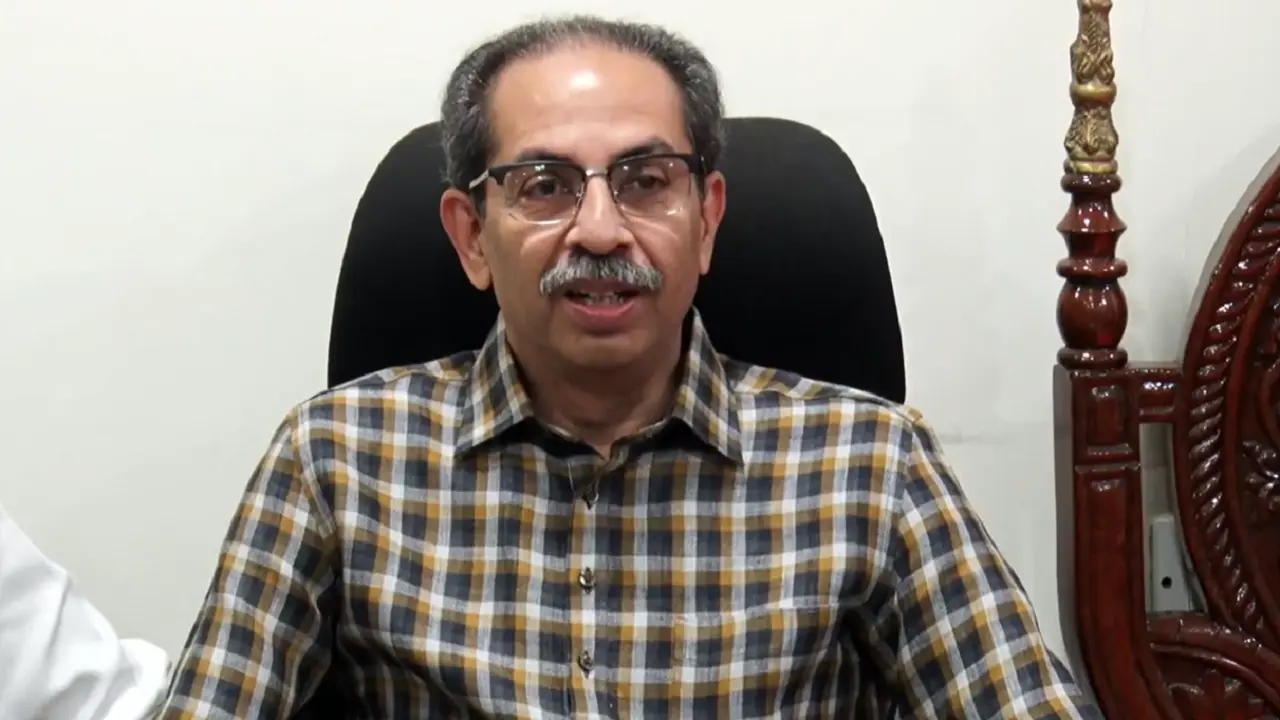
The Shiv Sena (UBT) on Wednesday accused the Maharashtra government of neglecting tribal communities in Gadchiroli, citing the deaths of three schoolgirls in a snakebite incident at a residential tribal school as evidence of inadequate safety, healthcare and infrastructure in the region.
In an editorial published by the party's mouthpiece, the Shiv Sena (UBT) said the incident at an aided residential tribal school in Japatlai, in Gadchiroli district's Dhanora taluka, highlighted the risks faced by children living and studying in remote areas.
Six schoolgirls were bitten by venomous snakes, according to the editorial. Three died at the site, while two others were reported to be in critical condition.
Party cites snakebite deaths as sign of wider neglect
The party said the tragedy occurred on the International Day of the World's Indigenous Peoples and argued that it reflected the difficult conditions faced by tribal communities in the region.
The editorial said that although Naxalite activity in Gadchiroli has declined, residents continue to face threats arising from inadequate infrastructure, industrial activity and a lack of basic public services.
It alleged that tribal communities, which have traditionally depended on the region's land, water and forests, are being increasingly displaced by industrial and mining activities.
The party also alleged that heavy vehicles associated with mining operations have created safety risks for residents. It claimed that more than 1,500 people had been killed in accidents involving speeding mining trucks, though the figure was not independently verified.
Mining activity blamed for environmental concerns
The editorial also criticised plans to develop Gadchiroli as an industrial and steel hub, arguing that large-scale mining and industrial activity had affected the local environment.
According to the party, industrial waste and residue have affected homes and agricultural areas, while residents have faced concerns over the quality of water and food.
The Shiv Sena (UBT) also alleged that people who raise objections to mining and industrial activity are sometimes branded as Naxalites or traitors and face legal action.
The party argued that the expansion of mining activity has also affected wildlife habitats, increasing the possibility of animals such as leopards and snakes entering villages, residential areas and school campuses.
Tribal schools face infrastructure shortages
The editorial linked the snakebite incident to what it described as poor infrastructure in tribal residential schools.
It alleged that several such schools suffer from structural problems, including cracks in buildings, inadequate sanitation and insufficient medical facilities.
The party further claimed that students in some institutions lack basic furniture and are forced to sleep on floors.
According to the editorial, these shortcomings increase the vulnerability of children who live on school campuses and have limited access to immediate medical assistance during emergencies.
The party said the snakebite deaths should therefore not be viewed as an isolated incident but as part of broader concerns about the safety and living conditions of tribal students.
Healthcare gaps add to risks in remote areas
The Shiv Sena (UBT) also highlighted what it described as inadequate emergency healthcare facilities in Gadchiroli.
The editorial alleged that the absence of adequate emergency transport and government ambulance services forces critically ill patients and pregnant women in remote areas to travel long distances using makeshift stretchers.
It further claimed that families have sometimes been forced to carry the bodies of deceased children over difficult terrain because of a lack of transportation.
The party said the lack of timely medical assistance can prove particularly dangerous in cases involving snakebites, where rapid access to treatment can be critical.
Party questions government's approach to Gadchiroli
The Thackeray-led party sharply criticised the state government over its handling of tribal welfare and infrastructure in the district.
In a strongly worded observation, the editorial suggested that government ministers should be made to experience the dangers faced by tribal residents to understand the severity of the situation.
The party argued that the decline in Naxalite activity in Gadchiroli should have been followed by greater investment in healthcare, education, transport and basic infrastructure for tribal communities.
Instead, it alleged that the primary focus of development in the region has been on securing industrial and mining interests.
Shiv Sena (UBT) links development to industrial interests
The editorial concluded that efforts to reduce Naxalite activity in Gadchiroli had not sufficiently improved living conditions for the region's tribal population.
The party alleged that the security gains in the region were being used primarily to facilitate industrial and commercial projects rather than to address the basic needs of indigenous communities.
The Shiv Sena (UBT) called for greater attention to the safety of tribal children, improved residential school infrastructure, better emergency healthcare facilities and stronger safeguards for communities living in areas affected by mining and industrial activity.
* This article was originally published here


No comments:
Post a Comment