

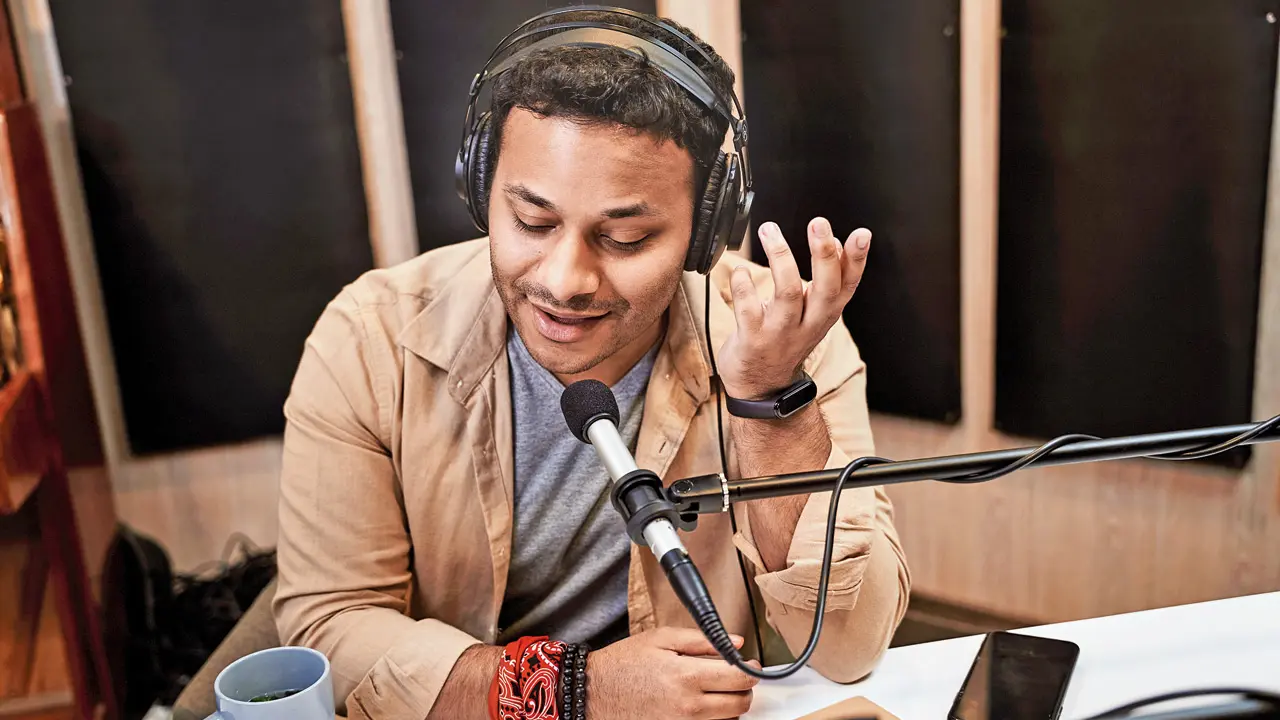
This week, the media industry woke up shell-shocked at the decision to surrender key FM radio licences across major cities. The shutdown of stations operating under brands such as Radio Nasha, Radio One, and Fever FM (Chennai) has triggered alarm across broadcasters because it’s not another media restructuring exercise in a rapidly digitising entertainment economy. It’s the clearest sign yet that the private FM broadcasting, once among the country’s most influential and fastest-growing mass media sectors, has entered a full-scale structural crisis.
But as painful as it is, people in the business aren’t surprised. After all, the industry, they say, has spent years warning the government that rising regulatory costs, outdated policy structures, and the rapid migration of listeners and advertisers to digital platforms were making large parts of the FM business economically unsustainable. Now, those warnings are beginning to materialise in the form of station closures, layoffs, shrinking investments, and companies exiting markets altogether.
Unlike global audio platforms, private FM broadcasters continue to operate under licensing structures designed during the early expansion era of Indian radio, including revenue-sharing obligations, auction-linked fee calculations, and restrictions on broadcasting news and current affairs. At the same time, advertisers have increasingly shifted spending toward digital media, as younger audiences now consume music primarily through streaming apps.
‘Radio needs to be set free’
Nisha Narayanan, director and COO, Red FM. PIC/X/@nisha_narayanan
Nisha Narayanan, director and COO, Red FM, explained, “India has the world’s largest radio audience, with 40 crore listeners tuning in across private FM, AIR and community radio. The industry is to reclaim its identity as a live, local, indispensable community voice and not a music channel competing with global audio OTTs. Unified advocacy must secure rationalised licensing, lifted restrictions on independent news and mandatory FM chip activation on smartphones. If Make in India and Vocal for Local initiatives are to be implemented, they must be extended to the homegrown medium that has carried local voices for nearly a century. Radio doesn’t need to be rescued but set free.”
‘Industry must introspect’
Yatish Mehrishi, CEO of Radio Mirchi. PIC/X/@CII4MNE
The deterioration of a medium that once was a common person’s trusted companion cannot be attributed to only the lack of reforms and new players in the market. Some of the blame has to be borne by those calling the shots. Yatish Mehrishi, CEO of Radio Mirchi, believes it’s only right that the industry looks inwards about where it has gone wrong.
“Somewhere along the way, we became lazy and stopped innovating. We got too comfortable with repetitive music programming, predictable ad breaks, and standard RJ formats. If radio wants to remain relevant long term, we have to rethink the ad-to-talk ratio, programming formats and rediscover what makes the medium unique. Audio is an intimate medium. It works in the mind differently from video. In many ways, trying to force audio into video-first behaviour is actually hurting the medium. The future of radio cannot only be about survival or regulation. It also has to be about being true to the core strengths of audio again.”
‘Look for RJs, not reel makers’
RJ Stutee Ghosh stated, “Even when we would do a live show and knew lakhs of people were tuning in, for that one listener, it felt like the RJ was speaking to them. It’s a hugely intimate medium. It is appointment listenership and a very convenient background mode of entertainment. You can have the radio on while you’re doing your thing.” That’s where the role of a radio jockey becomes crucial. Consequently, the hiring for the post, which seems to be another aspect that the industry is failing at, Ghosh shared.
“Sadly, we are no longer hiring people for qualities that make them a good RJ. We are not looking at their voice quality, how smart they are about the pronunciation and the diction. We are just looking at them as people who are comfortable in front of the camera, and things like ‘Can they talk? Can they make funny reels?’ It is sad. I’m talking about my fraternity. But you have sexist jokes, pranks, and double-meaning jokes happening. We are catering to the lowest common denominator. It was next to death if you mispronounced a word on air, because lots of people were listening to you live. And now you’re not even being hired for that skill set. What’s being given importance to is how many followers you have. How will that make sense?”
‘Station closure is part of larger trend’
Abraham Thomas, CEO of Radio City, told mid-day, “For years, the industry has been asking the government for structural relief — rationalisation of licence fees, GST reduction, permission for news and current affairs on private FM, and wider FM access on mobile phones. Those changes still haven’t come, and now the stress is beginning to show across the industry. What you are seeing with Radio Nasha, Fever [Chennai], and Radio One is part of a larger trend. Other networks have already scaled down or shut stations, and several players are reassessing viability market by market. Ad revenues are under stress, so every broadcaster is restructuring operations and trying to build efficiencies. We have all cleaned up our cost structures as much as possible, but the industry has now reached a stage where some structural intervention is necessary.”
Abraham Thomas, CEO of Radio City. PIC/X/ @abethomask
Thomas believes a change in the cost structure can provide some relief. “Broadcasters pay a four per cent revenue share, but there is also a minimum floor linked to historical auction pricing of frequencies. We have repeatedly requested that this be simplified to a straight revenue-share model. That alone would provide substantial relief.”
It’s not the medium but the rigid business model that’s hurting the industry, Thomas said. “Radio continues to remain a powerful public communication medium. Disaster communication, emergency messaging and even programmes like the Prime Minister’s Mann Ki Baat depend heavily on radio reach. The industry believes that if some of these long-pending reforms come through, FM radio can remain viable and relevant in India’s media ecosystem.”
‘Stations play half a song’
Radio jockey Stutee Ghosh, with an experience of almost two decades, stated that over time, FM stations have lost their uniqueness. Top that with “terrible advertisements” and redundant programmes and the result is lost listenership.
Stutee Ghosh, radio jockey. PIC/INSTAGRAM/@stuteeghosh
“Probably, the music will be a differentiator between one or two radio stations. Otherwise, all private radio stations sound alike. We have the same clocks, meaning all stations play ads at the same time. So, for a radio listener, it’s a terrible listening experience. I admit to terrible ads being made and played on it. We don’t play enough songs. We play half a song, which is a cardinal sin. When everybody has their own playlist on music streaming platforms, what is it that will pull you to the radio?” she said.
Radio jockeys want…
1 An end to dated formats like prank calls and sexist jokes
2 FM stations to play full songs, not just hook portions
3 Hiring to be done based on skill set, not followers
4 Hyperlocal programming
Radio broadcasters want the govt to...
>> Rationalise licence fees by applying a pure 4% Adjusted Gross Revenue (AGR) model and extending existing FM licences without fresh auctions.
>> Reduce GST on FM radio from 18% to 5% to bring parity with other media sectors.
>> Allow private FM stations to broadcast news and current affairs under a regulated framework.
>> Make activation of FM radio receiver chips mandatory on smartphones to ensure access to radio listeners.
* This article was originally published here


No comments:
Post a Comment